

Last updated:
 Introduction
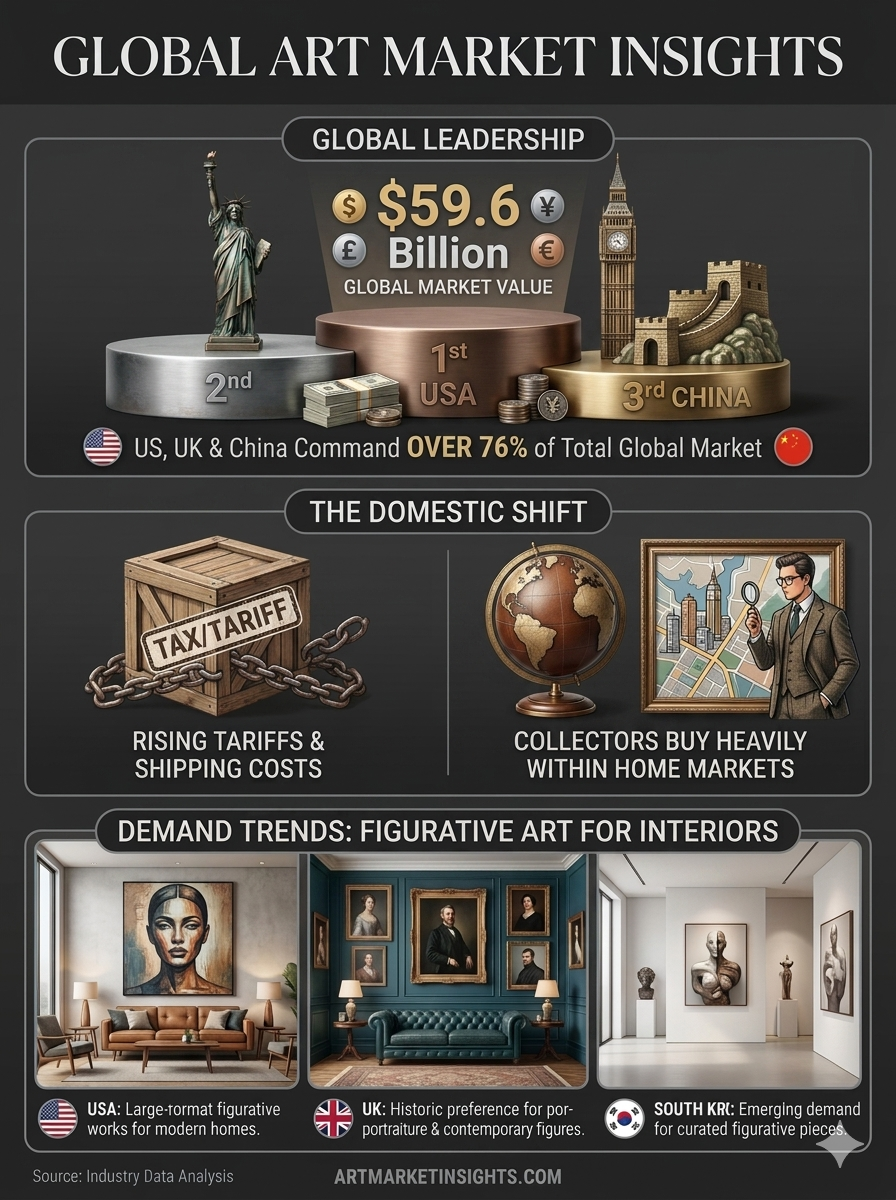
Global art buying is increasingly concentrated, with the top three nations commanding more than three-quarters of worldwide market value. The Art Basel and UBS Global Art Market Report 2026 recorded total global sales at $59.6 billion, driven by a powerful structural shift toward domestic purchasing. As cross‑border trade barriers and logistics costs rise, collectors are choosing to buy within their home countries. This trend is heavily reshaping how artists position their work, particularly those creating contemporary figurative art for interiors.
Insights
- Top 3 Markets:
The US, UK, and China command over 76% of the total $59.6 billion global art market. - The Domestic Shift:
Rising tariffs and shipping costs mean collectors now buy heavily within home markets. - Trending:
Demand is surging for high-quality figurative art for interiors, specifically in the US, UK, and South Korea.
The Structural Benefits of Sourcing Art Locally
- Zero Tariffs: Eliminates reliance on complex cross‑border shipping regulations.
- Ecosystem Support: Directly strengthens local gallery networks and regional art fairs.
- Predictable Trends: Creates more reliable buyer behaviour tied to regional economic indicators.
- Cultural Identity: Supports artists whose work reflects national identity or regional aesthetics.
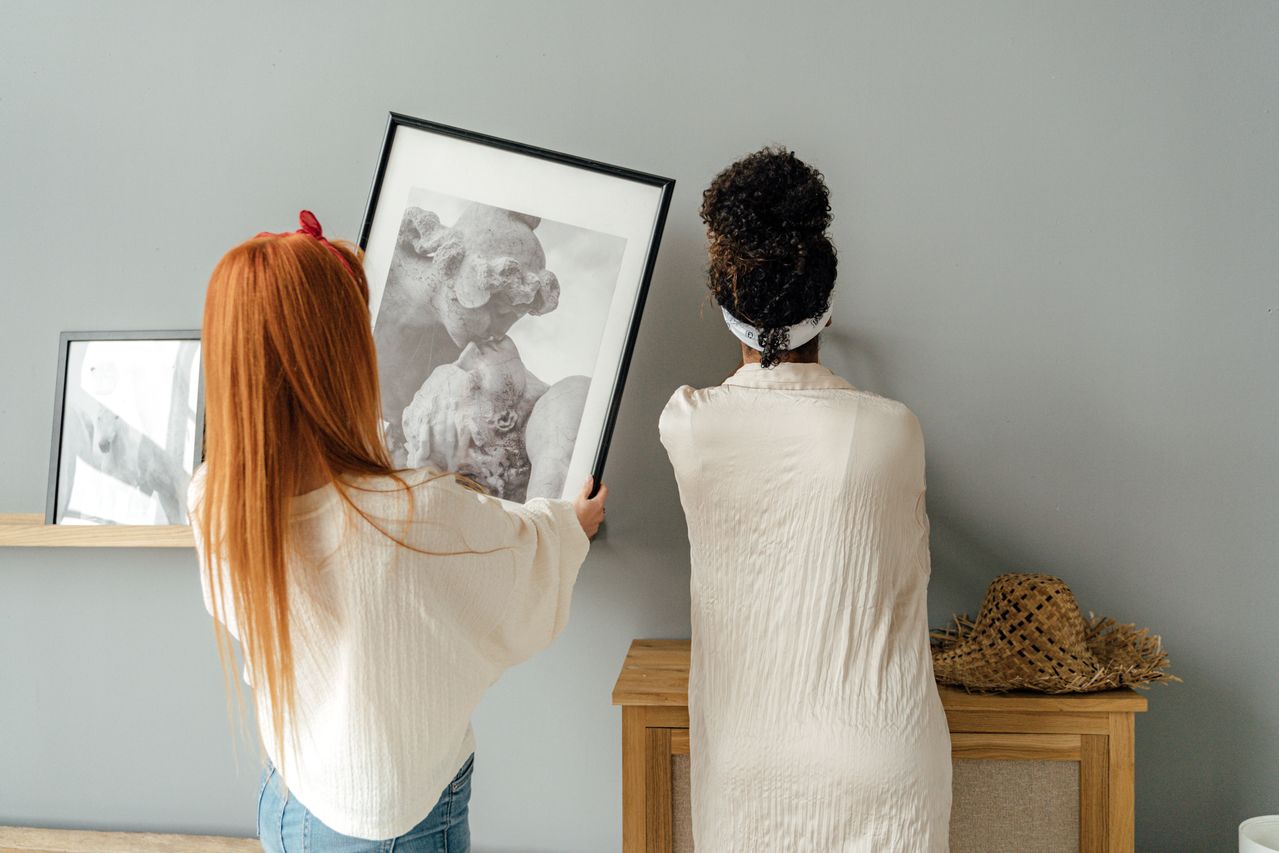 Sourcing and placing large-format figurative art prints to anchor modern minimalist spaces.
The Top 10 Global Markets for Domestic Art
These ten nations lead the global market through a combination of domestic purchasing strength, wealthy collector bases, and local design influence.
1. United States
The United States holds a dominant 44 percent share of the global market, valued at $26 billion. Domestic buyers drive the vast majority of these sales. American collectors heavily favour large‑format figurative art for interiors, specifically to anchor open‑plan homes and luxury real estate developments.
2. United Kingdom
The United Kingdom ranks second globally with an 18 percent market share and $10.5 billion in sales. London remains a resilient hub despite post-Brexit trade adjustments. Local collectors show a strong, historic preference for contemporary figurative painting and modern British portraiture.
3. China
China commands a 14 percent global market share, generating $8.5 billion. While its international trading hubs have shifted, Mainland China’s purely domestic purchasing market continues to grow steadily by 5 to 6 percent annually, focusing heavily on regional heritage art.
4. France
France leads the European Union with 7 percent of global sales, valued at $4.2 billion. Paris’s domestic gallery scene is thriving, driven by local collectors who intentionally prioritise French national artists and design‑forward contemporary installations.
5. Germany
Germany remains a powerhouse domestic market, driven by highly design‑literate collectors. The market focuses heavily on decorative art, sculpture, and European photography, with buyers frequently integrating sleek figurative art for interiors that feature minimalist architecture.
6. Switzerland
Switzerland maintains an exceptionally high concentration of ultra-high-net-worth collectors. These buyers purchase heavily from premier domestic art fairs like Art Basel. Swiss collectors prioritise investment-grade craftsmanship and refined, understated works.
7. Japan
Japan continues to show resilient domestic growth despite broader regional economic slowdowns. Active high‑net‑worth buyers demonstrate a growing interest in contemporary painting and figurative work scaled perfectly to complement modern Japanese urban interiors.
8. South Korea
South Korea is a booming regional hub for ultra‑contemporary art, powered by a young wave of domestic tech-wealth buyers. Local galleries are expanding rapidly, and these younger collectors show a distinct preference for bold, colorful figurative art.
9. India
India is experiencing a massive surge in corporate art collections and private domestic buying, centered around Mumbai’s competitive auction market. Buyers are increasingly drawn to contemporary figurative painting that features culturally resonant themes.
10. Singapore
Singapore functions as a tax‑advantaged wealth center and the primary Southeast Asian collection hub. Local domestic buyers actively support regional artists, acquiring statement art tailored to premium, high-rise luxury interiors.
Actionable Steps for Contemporary Creators
- Target Design Hubs: Align marketing portfolios with high-end interior design trends in the US, UK, Germany, and Singapore.
- Leverage Global Platforms: Use digital discovery engines like Saatchi Art or Artsy to bypass traditional physical entry barriers into these top ten countries.
- Emphasise Emotional Realism: Highlight cultural specificity and narrative-driven figurative styles that resonate with local home environments.
Closing
Domestic art markets are becoming more influential each year, dictating how collectors buy and how creators display their portfolios. For artists specializing in figurative art for interiors, understanding these geographical wealth shifts is essential to scaling an international career.
Further Reading & Data Sources
- Art Basel and UBS Global Art Market Report 2026
https://www.ubs.com/global/en/our-firm/art/art-market-research.html - Ocula Magazine’s Analysis of Ultra‑High‑End Sales
https://ocula.com/magazine/art-news/ultra-high-end-sales-ubs-art-basel-report/ - How to Buy Art for Home Decor