

Last updated:
For high-end interior designers and serious art collectors, selecting a piece of art goes far beyond basic color matching. There is a common misconception that a striking portrait or an expressive charcoal sketch should rely entirely on immediate visual beauty to anchor a room. However, in luxury residential projects and curated architectural spaces, visual aesthetic is merely the surface layer.
To truly understand why an artwork commands a space, one must look beneath the canvas. Embracing contemporary figurative art theory is not about overcomplicating an image. Instead, it serves as the essential framework that explains why certain images hold undeniable presence in a room.
By understanding this theoretical foundation, design professionals can easily translate a gut emotional reaction into a lasting spatial asset. This knowledge elevates an artwork from a simple decorative feature to a deep psychological anchor.
What is Contemporary Figurative Art?

At its core, contemporary figurative art theory explores the concepts, historical movements, and philosophies that underpin how artists depict the human form today. If technical skill represents the physical anatomy of a drawing, art theory is its emotional psychology.
Figurative Abstraction: the Balance of Form and Feeling
One of the most vital arenas within contemporary figurative art theory is the concept of figurative abstraction. For decades, the art world was deeply divided. You were either a traditional realist committed to capturing the physical world accurately, or an abstractionist focusing entirely on pure shape and gesture.
Today’s design-forward figurative movement completely rejects this binary.
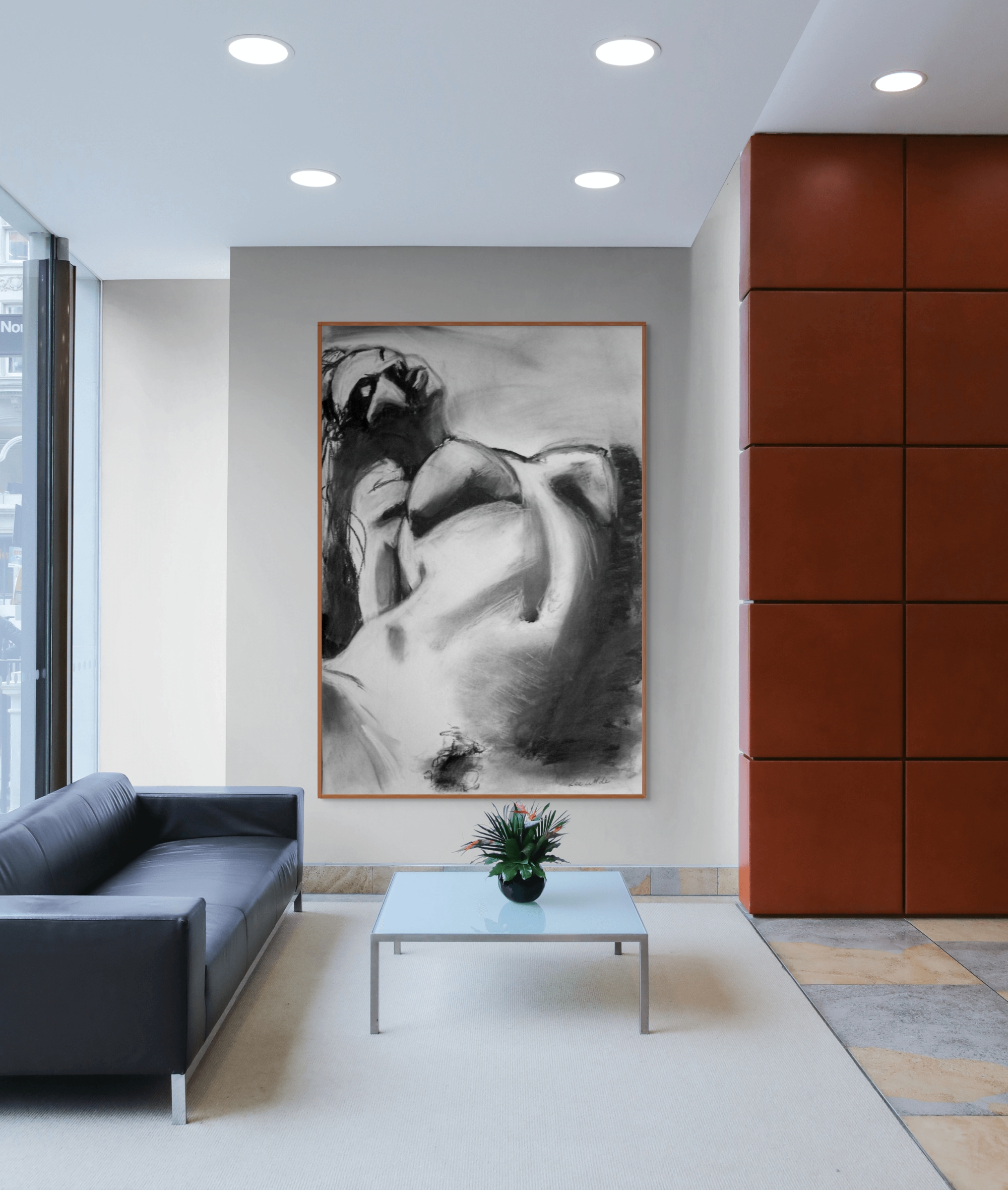
Modern spaces heavily benefit from artists who use figurative abstraction to find a middle ground. By stripping away hyper-realistic details—leaving a face partially obscured by shadow or dissolving a silhouette into expressive charcoal strokes—the artist creates space for individual interpretation.
This technique draws heavily from phenomenology, a branch of theory focused on how we physically experience objects. When an artwork remains ambiguous, our brains work harder to interpret it. We project our own memories onto the canvas. The art stops being a portrait of a stranger; it becomes a mirror for our own inner psychology.
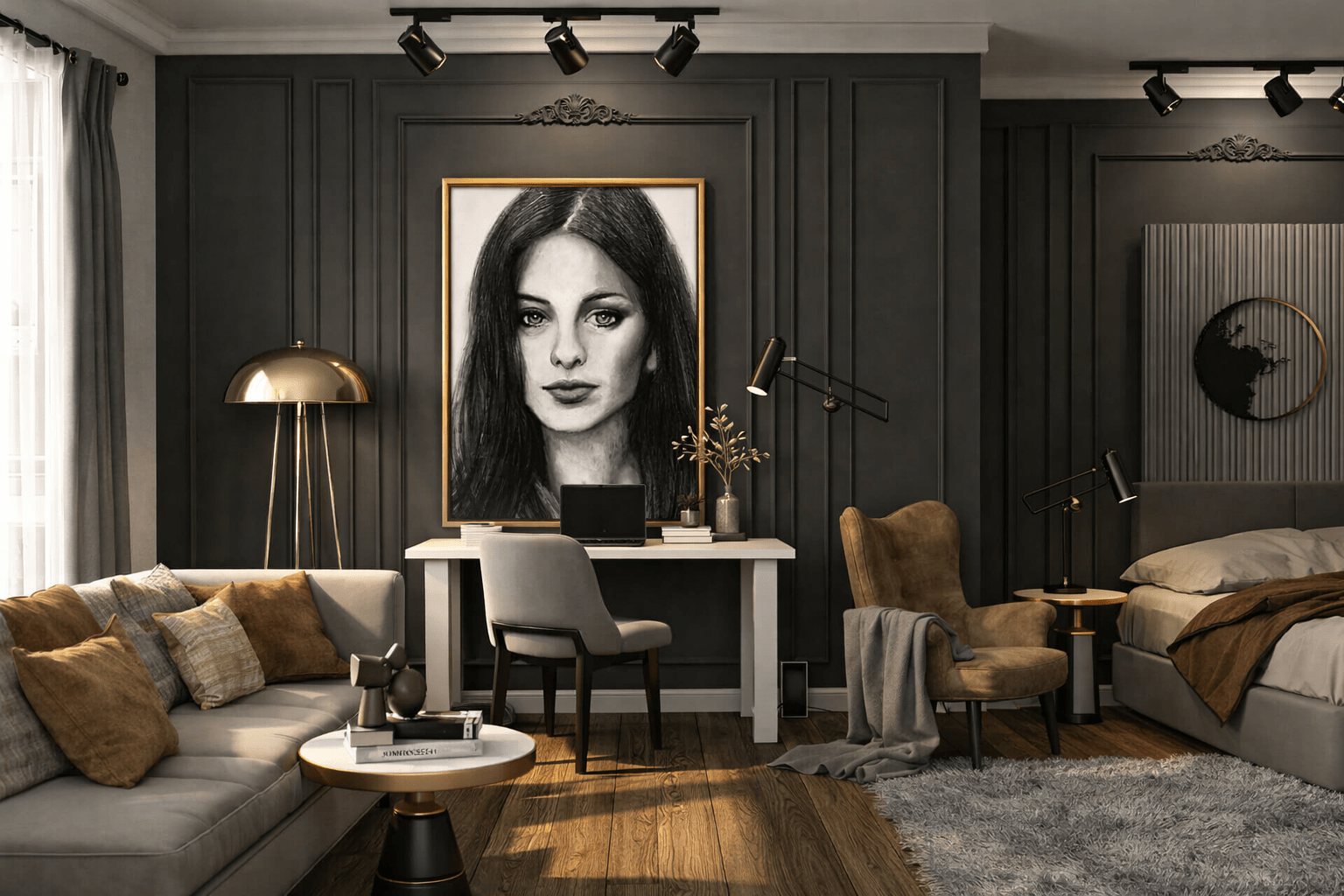 A cinematic interior featuring Lee Wilde’s monochromatic portrait “Another Sad Love Song,” illustrating the emotional realism and atmospheric mood shaping Australian figurative painting in 2026.
The Intersection of Emotional Realism and Luxury Interiors
For an interior to feel curated rather than staged, the art must carry narrative restraint. Contemporary figurative art theory gives designers the vocabulary to justify high-end art acquisitions through two distinct conceptual lenses:
- Emotional Realism: This concept asserts that emotional accuracy is far more valuable than literal, photographic accuracy. A portrait uses deliberate tonal distortions and raw linework to capture the psychological reality of human vulnerability.
- Cinematic Tension (Neo-Noir): Heavily influenced by film theory, this lens explores how shadow density creates spatial weight. It examines the balance of negative space, treating darkness as a deliberate structural choice that alters the emotional temperature of an interior.
When a designer places a moody, large-scale figurative piece in a minimalist home, they are applying these exact frameworks. They use visual restraint to build drama without introducing unnecessary visual noise.
Key takeaway for designers: High shadow density and low tonal

variance create a focal anchor point that lowers the sensory

noise of a high-ceilinged room.
 Styling emotional realism: a moment of quiet curation, where art meets atmosphere and memory
Why Curation Requires Context
For the modern collector and designer, buying art is an intellectual investment just as much as a visual one. Knowing the contemporary figurative art theory behind a piece completely changes how you live with it.
When you understand these concepts, you aren’t just buying canvas, pigment, or framed paper. You are bringing a specific philosophical perspective into your architectural environment. You choose a piece because its scale, shadow play, and conceptual depth act as an intentional, permanent anchor for your home.
Ultimately, art theory strips away the superficiality of fast-moving design trends. It reminds us that the spaces we inhabit should be built with true feeling, historical awareness, and quiet intention.