

The Film
Title: Sabrina (1995) Director: Sydney Pollack Genre: Romantic Drama / Comedy
Sabrina (1995) is a polished, modern retelling of the classic 1954 film — a story shaped by elegance, restraint, and the emotional geometry of class, longing, and transformation. Directed by Sydney Pollack, the film blends corporate sophistication with quiet romantic tension, framing its characters inside a world of order, wealth, and carefully managed appearances.
The Artwork
Artwork: Attic (1949)
Artist: Willem de Kooning
Movement: Abstract Expressionism
Attic is one of de Kooning’s landmark works — a dense, gestural composition that captures the restless energy of post‑war New York. It marks a turning point in his practice, where figuration dissolves into abstraction without ever fully disappearing. The painting’s layered surfaces and fractured forms helped define the movement’s raw, improvisational language.
 Willem de Kooning’s Attic (1949)
Scene Context
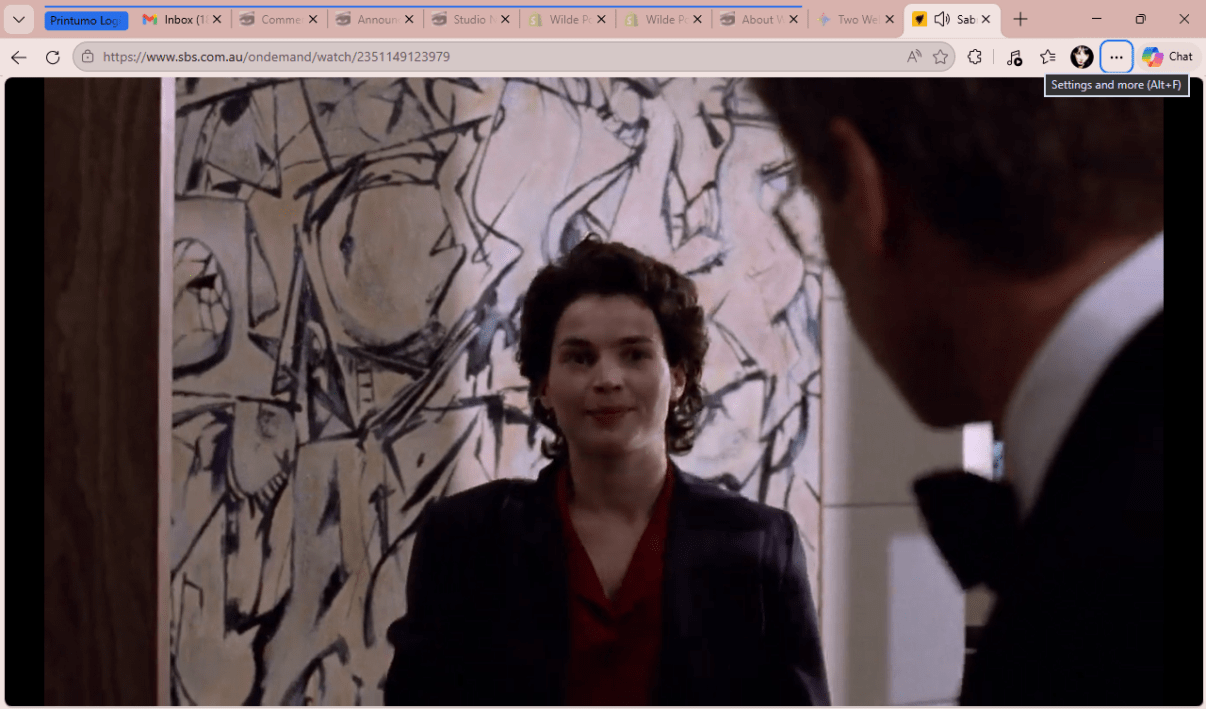
In one of the film’s quieter moments, Julia Ormond stands framed against the controlled elegance of a corporate interior. The camera lingers just long enough for a major artwork to surface behind her — a flash of post‑war intensity inside a polished romantic drama.
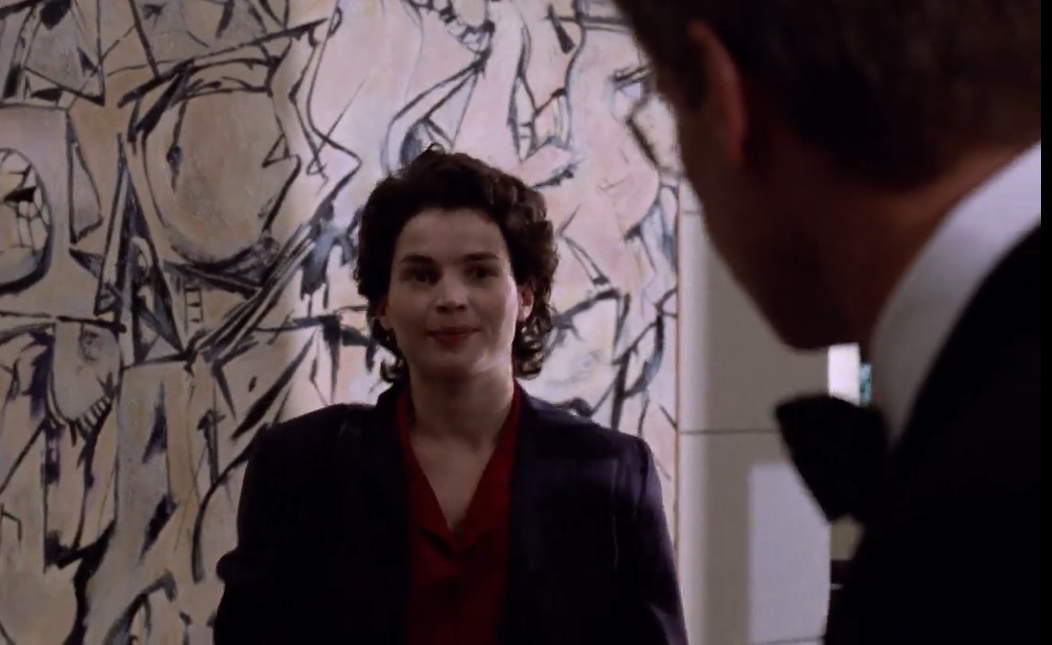 Sabrina (Julia Ormond) enters Linus Larrabee’s office. Behind her hangs de Kooning’s Attic (1949), one of the defining works of Abstract Expressionism.
Why this Painting?
The placement of Attic behind Ormond introduces a subtle counterpoint to the film’s polished romantic tone. De Kooning’s turbulence sits in quiet tension with the controlled world of the Larrabee family — a reminder that beneath the film’s elegance lies a story about identity, disruption, and emotional risk.
Seen from Linus’s perspective, the moment becomes an intoxicating mix of chaos and beauty. This is the real cinematic logic.
A. Linus is a man of order. His world is:
- corporate
- controlled
- rational
- emotionally suppressed
B. Sabrina represents disruption. She brings:
- warmth
- unpredictability
- emotional risk
- a break in the pattern
C. Attic mirrors the emotional turbulence he doesn’t yet understand.
De Kooning’s painting is:
- chaotic
- unresolved
- full of tension
- gestural and alive
Placed behind Sabrina, the painting becomes psychological foreshadowing — injecting a jolt of chaos into Linus’s ordered world and offering a visual hint of the emotional disruption he’s beginning to experience.
The Cinematic Function
Visually, Attic destabilises the frame. Its jagged forms and restless brushwork inject movement into an otherwise static corporate setting. The painting’s intensity amplifies the emotional stakes of the scene, adding depth without drawing overt attention. It’s a moment where cinema borrows the psychological charge of fine art to enrich character and atmosphere.
These intersections between film and fine art reveal how visual culture circulates quietly through the stories we watch.