
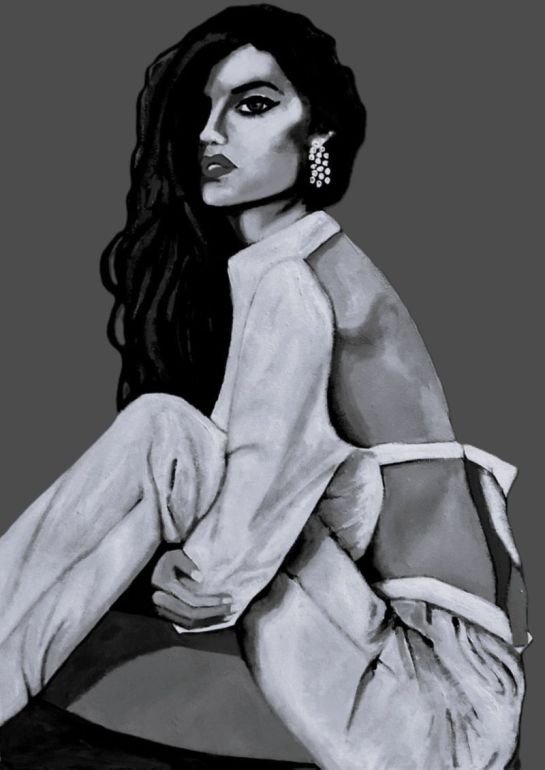


Negative space is one of noir portraiture’s most powerful emotional tools because it shapes how the viewer reads the subject, the mood, and the tension inside the frame. When the space around a figure is intentionally left open, quiet, or dark, it becomes an active force — a kind of atmospheric pressure that guides the eye and sets the emotional temperature of the portrait. In noir, this empty space is never empty. It’s charged, deliberate, and deeply psychological.
How Negative Space Builds Noir Tension
Negative space in noir portraiture works by controlling what the viewer is allowed to see and what they’re encouraged to imagine. When a portrait leaves room around the subject, that space becomes a field of tension. It can make the figure feel isolated, watched, or suspended in a moment of unresolved emotion. This is why negative space noir portraiture often feels cinematic — the emptiness behaves like a character.
Negative space also shapes the rhythm of the composition. A tightly framed portrait with minimal breathing room creates claustrophobia and intensity. A wider frame with large areas of darkness creates mystery and emotional distance. Both approaches rely on the same principle: the space around the subject is as expressive as the subject itself.
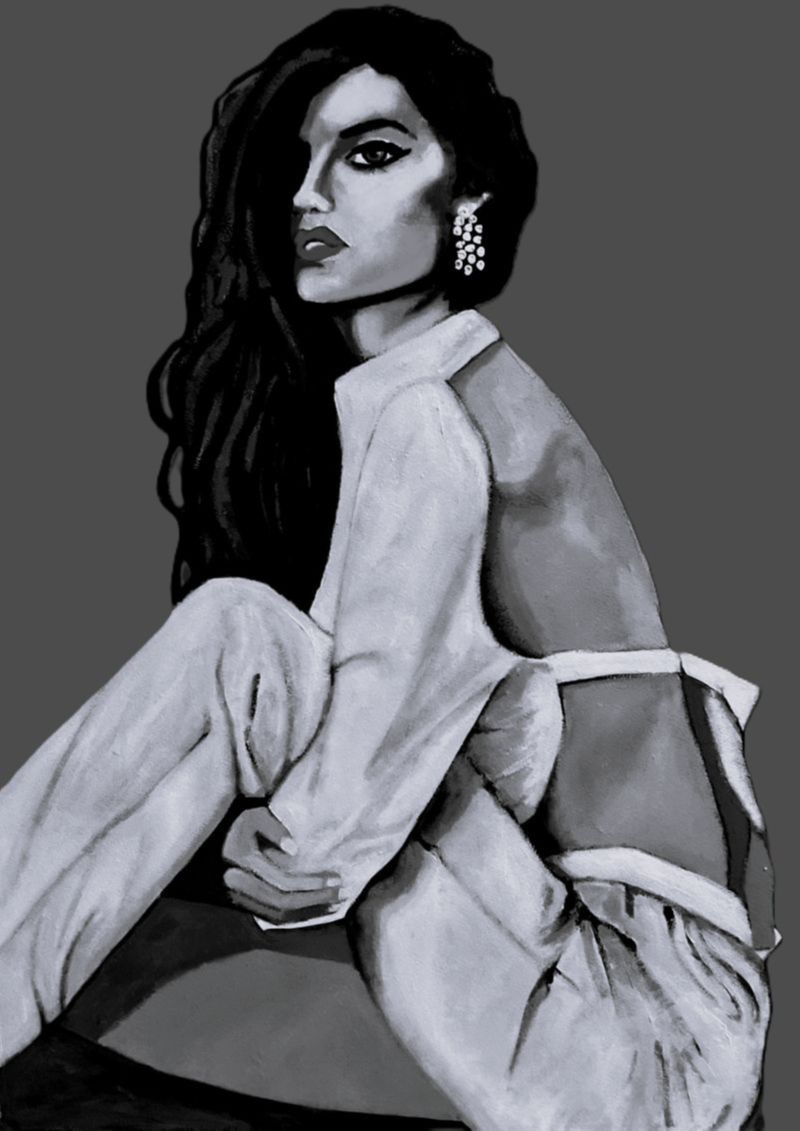 Sierra by Lee Wilde 2025
Why Designers Rely on Negative Space Noir Portraiture
Designers often choose negative space noir portraiture for minimalist interiors because the work introduces mood without overwhelming the room. The open areas of the composition echo architectural simplicity, while the concentrated figure adds emotional gravity. The result is a portrait that feels both quiet and charged — a perfect fit for spaces that value restraint.
Negative space also enhances the sense of scale. A portrait with generous dark space can feel larger, more architectural, and more immersive. It becomes a visual anchor, drawing the viewer in through atmosphere rather than detail. This is closely related to the emotional logic explored in:
https://wildeonart.com/the-psychology-of-high-contrast-faces/
For a broader look at how cinematographers use space to build tension, the American Society of Cinematographers offers valuable insights: https://theasc.com
Negative space noir portraiture works because it turns absence into emotion. The space around the subject becomes a quiet force — shaping mood, guiding attention, and deepening the psychological resonance of the image.