


Seeing Beyond Surface
In portraiture, skin is never just surface. It’s symbol, memory, myth. As an Anglo-Indian artist working in monochrome, I’ve spent years interrogating how tonal nuance can both reveal and obscure emotional truth—especially in a world shaped by colorism.
Colorism isn’t just a social bias. It’s a visual language—one that’s been embedded in art history, fashion photography, and editorial storytelling for centuries. Lighter skin has long been idealized, framed as aspirational, while darker tones are shadowed, softened, or erased. Even in contemporary realism, the gaze often carries inherited prejudice.
Emotional realism offers a counterpoint. It asks us to look again—not at color, but at feeling.
 Cheya by Lee Wilde 2009, rendered in charcoal and quiet light—an intimate study in emotional realism and identity
The Legacy of Colorism in Visual Culture
Colorism is often discussed in sociological terms, but its impact on visual storytelling is profound. In both Western and non-Western art traditions, lighter skin has been associated with purity, virtue, and desirability. Darker skin, by contrast, has been rendered as laboring, shadowed, or peripheral.
Fashion editorials, museum collections, and even contemporary portraiture continue to reflect these biases. The lighting choices, editorial framing, and post-production edits often reinforce a hierarchy of visibility. As Dr. Sarah Lewis has written, “Representation is not just about visibility—it’s about the terms of recognition.”
In my own work, I’ve felt the tension between visibility and vulnerability. Between being seen and being understood.
Emotional Realism as Counterpoint
Emotional realism isn’t about likeness—it’s about resonance. It’s the quiet architecture of feeling. In my practice, I strip away hue to focus on gesture, light, and emotional atmosphere. The absence of color isn’t neutral—it’s intentional. It allows me to explore how grief sits in the jawline, how longing pools in the eyes, how resilience shapes the tilt of a chin.
Monochrome becomes a kind of refuge. It lets me bypass the inherited codes of color and focus on emotional truth. It’s not that color is irrelevant—it’s that it’s often too loaded, too coded, too easily misread. By working in grayscale, I invite the viewer to feel rather than judge.
This approach echoes the ethos of artists like Zanele Muholi, whose black-and-white portraits reclaim dignity and emotional depth for Black subjects historically denied both.
 Rumours: a visual dialogue between tonal restraint and chromatic myth—where emotional realism confronts the gaze of colorism.
Personal Reflection: Identity and Gaze
I think often about the portraits I never saw growing up. Brown skin rendered with complexity, tenderness, and emotional depth. Not exoticized. Not flattened. Just seen.
As an Anglo-Indian woman, I navigate a layered gaze—one shaped by colonial history, cultural hybridity, and aesthetic expectation. My work is a quiet reclamation. A way of mapping identity through tonal nuance. A way of saying: I am here. I feel. I remember.
In the studio, I use light like a scalpel. I carve emotion into shadow. I let softness speak. Each portrait becomes a negotiation between visibility and vulnerability. Between what the viewer expects to see, and what the subject needs to say.
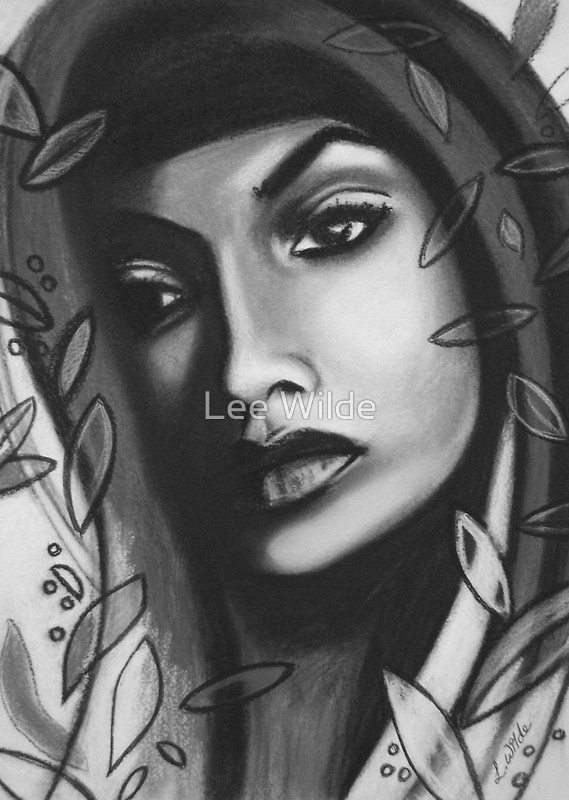 A quiet reclamation: emotional truth in portraiture rendered through charcoal, shadow, and tonal restraint
Studio Practice: Tonal Nuance and Emotional Architecture
Technically, emotional realism demands restraint. I work with graphite and charcoal to build emotional architecture without relying on color. Whilst doing this, I look closely at the way light falls across skin and subtle tonal shifts can evoke memory. Beginning with a single gesture… a hand, a gaze, a shoulder turned away, I build atmosphere, letting the portrait emerge slowly, like a whispered truth.
Emotional Realism as Reclamation
Colorism doesn’t disappear in monochrome. But emotional realism can disrupt its logic. It can reframe the gaze. It can offer a different kind of truth—one that lives in texture, in atmosphere, in the quiet insistence of being.
By centering emotional truth in portraiture, I hope to create space for complexity—for subjects who are not idealized or erased but felt. Seen. Known.
Further Reading: