Some artworks speak not just to the individual, but to the collective. Cultural wall art captures the emotional temperature of a society—its tensions, its quiet dignity, its moments of connection and disconnection. Whether through social realism, urban solitude, or symbolic abstraction, these pieces become mirrors. In this post, I explore how wall art can reflect cultural identity, offering viewers a way to see themselves and their world more clearly.
Art as Social Mirror
Cultural wall art often begins with observation. A figure waiting at a bus stop, a child staring out a window, a worker tying his shoes—these moments, rendered with care, reveal the emotional texture of everyday life. They speak to shared experience, to the quiet rituals that bind us.
Social realism, as explored by MoMA, shows how art can document and dignify the ordinary. It’s not about spectacle—it’s about truth. In my own work, I often depict solitary figures in urban settings, capturing the tension between anonymity and presence.
Identity and Representation
Art becomes cultural when it reflects who we are—not just individually, but collectively. Figurative wall art that centers diverse bodies, gestures, and emotional states contributes to a broader visual language of inclusion and empathy. It challenges dominant narratives and invites new ones.
The Whitney Museum of American Art curates works that explore identity through portraiture, abstraction, and social commentary. Their approach reminds us that cultural wall art is not static—it evolves with the stories we choose to tell.
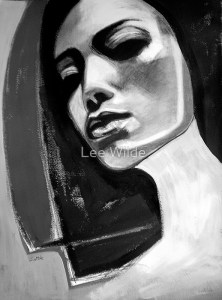
Angel by Lee Wilde
Emotional Tension in Urban Spaces
Cities are full of emotional tension—movement, isolation, connection, noise. Cultural wall art often captures this tension through composition and contrast. A lone figure against a backdrop of buildings. A shadow stretching across pavement. These images evoke the psychological weight of urban life.
Threads of Memory and Place
Cultural wall art also ties us to place. A street corner, a window, a familiar skyline—these elements root the viewer in a specific geography while inviting broader reflection. They become visual archives of lived experience.
When I create or curate these works, I think about what stories they carry. What does this figure remember? What does this space conceal? These questions guide the emotional and cultural resonance of each piece.
Cultural wall art reminds us that we are not alone in our experience. It reflects the beauty, tension, and complexity of the world we inhabit. Whether through realism, abstraction, or symbolic gesture, these pieces offer a mirror—not just to society, but to the soul of it. If you’re drawn to art that speaks to identity and collective memory, explore the collection or reflect on what your walls might be ready to say.
Cultural Wall Art That Mirrors Society and Identity
Art that reflects collective experience, emotional tension, and the quiet dignity of everyday life.
Some artworks speak not just to the individual, but to the collective. Cultural wall art captures the emotional temperature of a society—its tensions, its quiet dignity, its moments of connection and disconnection. Whether through social realism, urban solitude, or symbolic abstraction, these pieces become mirrors. In this post, I explore how wall art can reflect cultural identity, offering viewers a way to see themselves and their world more clearly.
Art as Social Mirror
Cultural wall art often begins with observation. A figure waiting at a bus stop, a child staring out a window, a worker tying his shoes—these moments, rendered with care, reveal the emotional texture of everyday life. They speak to shared experience, to the quiet rituals that bind us.
Social realism, as explored by MoMA, shows how art can document and dignify the ordinary. It’s not about spectacle—it’s about truth. In my own work, I often depict solitary figures in urban settings, capturing the tension between anonymity and presence.
Identity and Representation
Art becomes cultural when it reflects who we are—not just individually, but collectively. Figurative wall art that centers diverse bodies, gestures, and emotional states contributes to a broader visual language of inclusion and empathy. It challenges dominant narratives and invites new ones.
The Whitney Museum of American Art curates works that explore identity through portraiture, abstraction, and social commentary. Their approach reminds us that cultural wall art is not static—it evolves with the stories we choose to tell.
Emotional Tension in Urban Spaces
Cities are full of emotional tension—movement, isolation, connection, noise. Cultural wall art often captures this tension through composition and contrast. A lone figure against a backdrop of buildings. A shadow stretching across pavement. These images evoke the psychological weight of urban life.
Threads of Memory and Place
Cultural wall art also ties us to place. A street corner, a window, a familiar skyline—these elements root the viewer in a specific geography while inviting broader reflection. They become visual archives of lived experience.
When I create or curate these works, I think about what stories they carry. What does this figure remember? What does this space conceal? These questions guide the emotional and cultural resonance of each piece.
Cultural wall art reminds us that we are not alone in our experience. It reflects the beauty, tension, and complexity of the world we inhabit. Whether through realism, abstraction, or symbolic gesture, these pieces offer a mirror—not just to society, but to the soul of it. If you’re drawn to art that speaks to identity and collective memory, explore the collection or reflect on what your walls might be ready to say.
More from this Category
Foundational Essay: Wall Art That Speaks to Memory and Emotion
The Timeless Appeal of Black and White Décor
A Viewers Gaze: How Wall Art Invites Presence and Interpretation
Neo Noir Art and the Quiet Power of Shadow
The Quiet Gaze: Contemporary Realism in Australian Portraiture
Philosophical Wall Art for Quiet Reflection
Wall Art That Speaks to Memory and Emotion
Curating Emotional Realism: A Guide for Stylists and Collectors
Curator Joshua Smith: A Meditative Selection of Contemporary Figurative Art