


The Quiet Power of Scale in Luxury Architecture
Modern penthouses aren’t just large, they’re spatially assertive, and this is where Penthouse Wall Art Ideas for High Ceilings become essential for designers working with double height voids, exposed concrete planes, and uninterrupted glass walls. In these environments, small artworks disappear and mid-sized works feel apologetic. Scale becomes a language, and in high end interiors, it is the first thing a designer reads.
Large format monochrome portraiture doesn’t simply fill these spaces. It stabilises them. Oversized faces, rendered in tonal charcoal, create a visual anchor that prevents vast architectural surfaces from feeling vacant or emotionally cold. In a penthouse, scale is not decorative. It is structural.
Choosing Artwork for Double Height Walls
Designers working with vertical volume face a recurring challenge: how to ground a room that wants to float upward. A three metre void pulls the eye toward the ceiling, often leaving the lower half of the room psychologically underweighted.
Large noir portraiture solves this by introducing:
- Vertical gravity — a portrait with a strong gaze or dominant silhouette pulls attention back to human height.
- Spatial proportion — a tall canvas mirrors the architectural rhythm of the room.
- Emotional anchoring — monochrome faces introduce human presence into otherwise impersonal materials like concrete, steel, and glass.
The result is a room that feels intentional rather than cavernous.
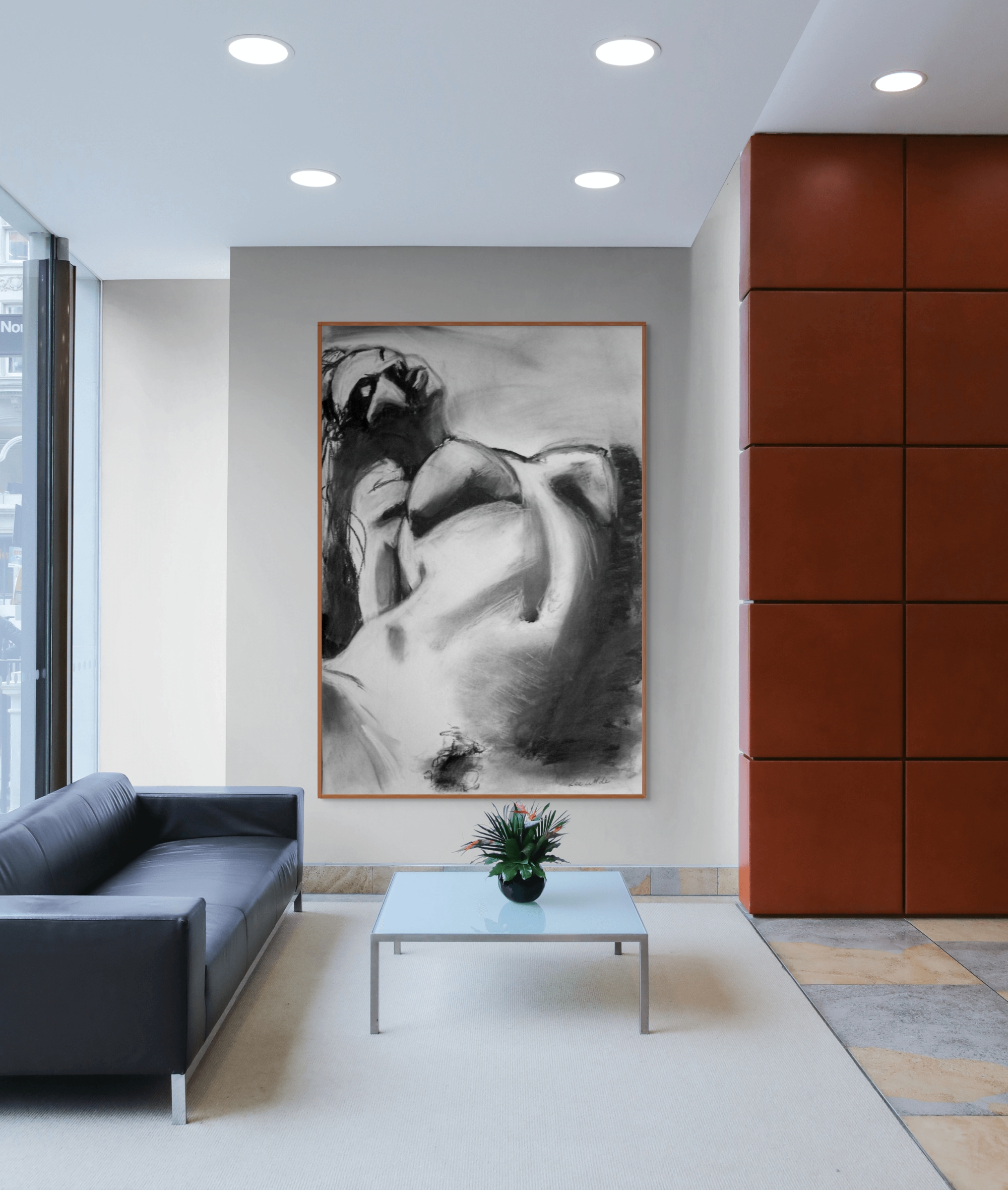 “Just Be Good to Me” by Lee Wilde. An expressive figurative work that balances vulnerability and strength through soft, textured strokes. Its muted palette and emotional immediacy make it ideal for contemporary interiors, introducing warmth and human presence without disrupting architectural calm.
The Emotional Temperature of Oversized Monochrome Artworks
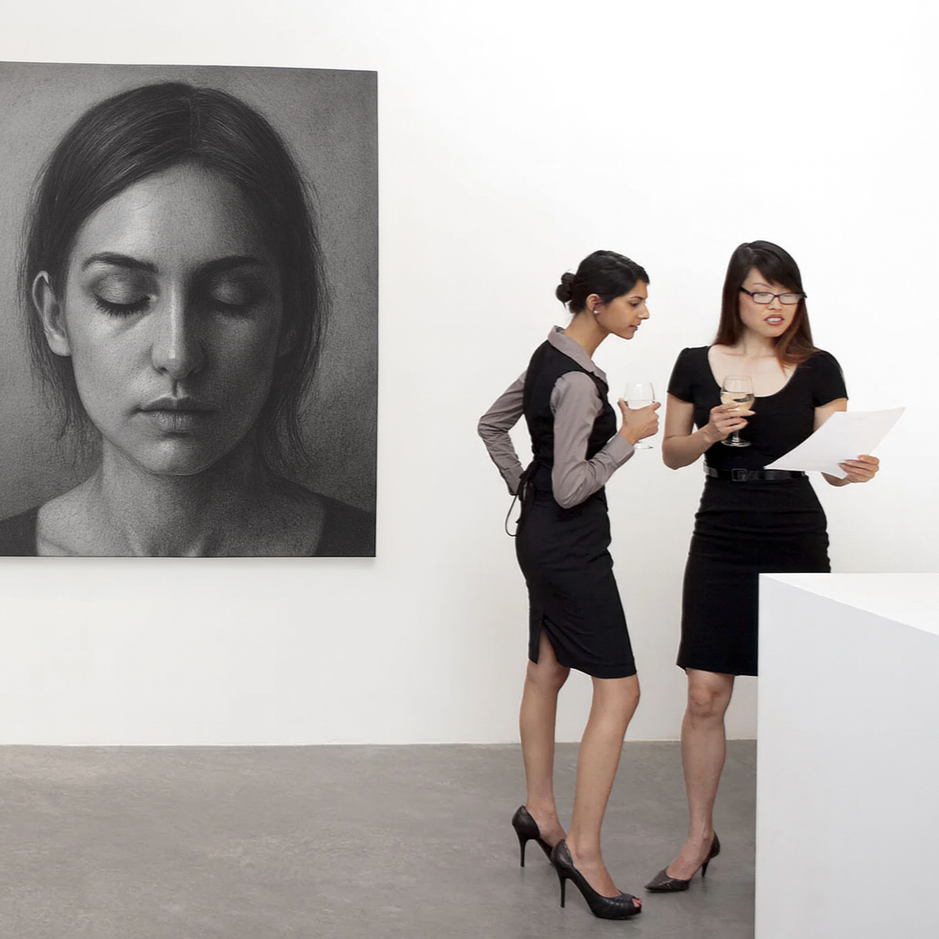
Charcoal and graphite behave differently at scale. A large portrait doesn’t just enlarge the subject; it enlarges the emotional field.
- Soft gradients become atmospheric
- Shadow density becomes architectural
- Negative space becomes part of the room’s geometry
Designers often describe this effect as cinematic calm, a quiet, controlled emotional temperature that suits luxury minimalism. Large noir portraiture doesn’t shout. It steadies.
How Designers Choose the Right Portrait for a Penthouse
High end designers follow a predictable decision pattern when selecting large format figurative work:
- Match the portrait’s verticality to the room’s height
- Use monochrome to neutralise competing colour palettes
- Select a gaze direction that influences movement through the space
- Choose unfinished or soft cubist works for transitional areas
- Reserve high detail emotional realism for living zones and foyers
Your work fits these criteria naturally, which is why it performs so well in architectural environments.
Also See: Proportion and Scale in Architecture, Art & Interior Design
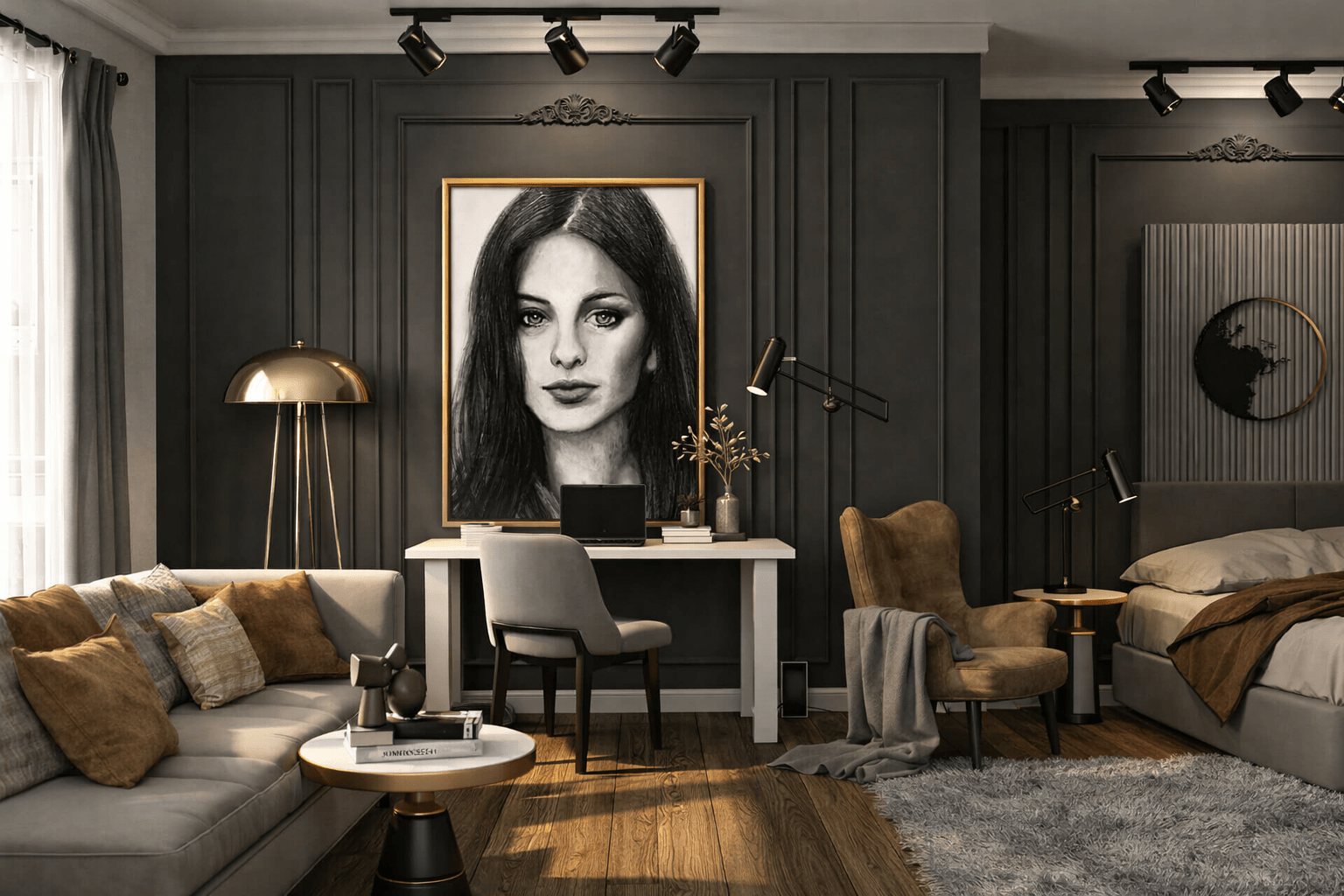 A cinematic interior featuring Lee Wilde’s monochromatic portrait “Another Sad Love Song,” illustrating the emotional realism and atmospheric mood shaping Australian figurative painting in 2026.
Why Collectors Respond to Large Noir Portraits
Collectors purchasing for penthouses aren’t buying decoration. They’re buying identity.
Large noir portraiture communicates:
- cultural literacy
- emotional restraint
- architectural awareness
- a preference for design literate art
- a commitment to long term aesthetic cohesion
In luxury spaces, scale is a form of confidence. A large portrait says the collector understands both art and architecture and knows how to make them speak to each other.
Closing Insight
In modern penthouses, scale isn’t an afterthought. It is the foundation of visual authority. Oversized monochrome portraiture doesn’t just fill space; it defines it. It gives vast rooms a centre of gravity, a human presence, and a cinematic calm that aligns perfectly with contemporary luxury design.