


Working from home as an artist involves more than managing logistics—it’s a way of inhabiting creative life with intention. My inner-city Sydney apartment serves as both home and studio, but it feels closer to a living canvas. It’s a quiet collaborator, a space that listens and responds. Every surface, from the worn timber floors to the textured walls, holds memory. Though modest in size, the apartment breathes with a kind of quiet generosity. Light moves through it with grace—morning sun filters through sheer curtains, casting soft shadows across my desk. As the day fades, evening light deepens the mood, stretching long across the walls and settling into corners like thought itself.
Materials in Dialogue with Light and Atmosphere
Charcoal, graphite, and conté form the core of my material practice, each engaging with light in distinct ways. Absorbing illumination, charcoal produces velvety shadows and rich, immersive blacks. In contrast, graphite catches glints and shifting highlights, its reflective surface changing with the viewer’s angle. Between these extremes lies conté—soft, matte, and quietly resonant, offering a tactile emotional depth that bridges absorption and reflection.
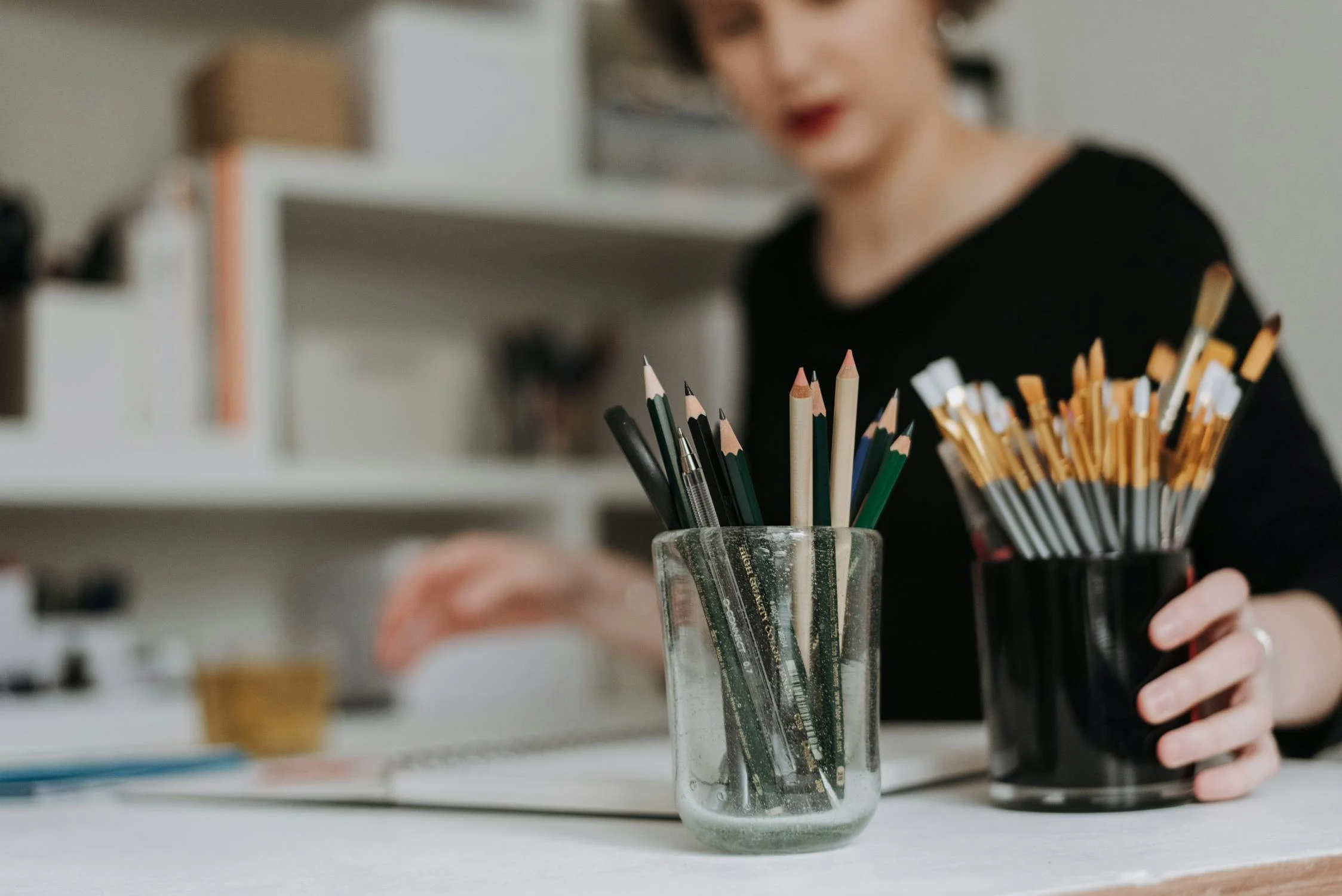
As I enjoy working primarily in monochrome, light has become my palette, defining contrast, revealing texture, and setting emotional tone. A single drawing can look entirely different depending on the time of day. This variability allows the work to evolve and breathe
Often, I photograph my drawings in morning light, when the shadows are gentle and the textures are clear. These images become part of the work’s archive, a record not just of the drawing but of the moment it was captured. When I attach images from my Monochromatic Portraits category, I’m sharing more than visual documentation—I’m sharing atmosphere, memory, and emotional temperature.
 Light as Emotional Temperature
Natural light is not neutral. It has emotional temperature, and it changes the way I approach my materials. In the early hours, the light is cool and precise. It sharpens the edges of graphite and lends clarity to charcoal. I often begin my day with quiet line work, letting the morning light guide my hand. As the sun climbs, the light warms. Conté responds differently—its softness becomes more pronounced, its texture more tactile. I find myself drawn to gesture, to movement, to the emotional weight of shadow.
By late afternoon, the light begins to fade. Shadows stretch across the paper, and the room takes on a cinematic hush. This is when I often shift into tonal work, exploring depth and contrast. The drawings made in this light feel different—more introspective, more layered. They carry the residue of the day, the quiet accumulation of thought and mood.
Importantly, light also affects my emotional state. When the studio is flooded with sun, I feel expansive. When it’s dim, I turn inward. This interplay between external light and internal feeling is subtle but profound. It shapes not only what I draw, but how I draw it.
The Quiet Hum of the City
Although I live in the heart of Sydney, my apartment feels removed from the noise. The windows face a quiet street, and the sounds that reach me are soft—footsteps, distant traffic, the occasional bird. This ambient hum is comforting. It reminds me that life is happening outside, but it doesn’t intrude. Instead, it creates a gentle boundary between solitude and connection.

Working from home in this environment allows for a kind of anonymity that is creatively nourishing. I am not performing, not presenting. I am simply present. The solitude is not empty—it’s full of potential. It gives me space to listen to the work, to notice the way a shadow falls or how a line curves unexpectedly. In this quiet, I find the emotional tension that fuels my drawings.
There’s also something about the city’s architecture—the way buildings hold light, the way windows reflect sky—that influences my visual language. I often find myself echoing these forms in my compositions, even unconsciously. The geometry of urban life seeps into the work, not as subject matter but as mood.
Rhythm and Space
Working from home allows me to remain immersed in the rhythm of the space. There’s no commute, no abrupt shift between external and internal worlds. Instead, the studio and I move together through the day, responding to light, mood, and silence. This continuity creates emotional layering in the work. Each drawing carries not only the marks I make, but also the atmosphere in which it was made. The hum of the city outside, the quiet within, the shifting light—all of it becomes part of the artwork’s emotional texture.
For those curious about how artists shape their environments, this interview with Sydney-based creatives offers insight into how space and mood intertwine.
Working from Home as Creative Practice
Working from home is often framed as a convenience, but for me, it’s a creative necessity. It allows for continuity, intimacy, and emotional layering. The studio is always available, always responsive. I can move between tasks fluidly—writing, drawing, reflecting—without interruption.
This flexibility also supports emotional honesty. I don’t have to mask or perform. I can work in silence, in music, in mood. The drawings that emerge are more authentic, more resonant. They carry the texture of lived experience, not just artistic intention.
Of course, working from home also requires boundaries. I’ve learned to protect my time, to structure my day, to honor the space as sacred. The studio is not just where I work—it’s where I think, feel, and create.
 The Studio as an Extension of Self
Over time, I’ve come to see my studio not just as a workspace, but as an extension of self. It reflects my rhythms, my moods, my intentions. The arrangement of materials, the placement of furniture, the way light moves through the room—all of it mirrors my internal landscape.
This idea is not new. Many artists speak of their studios as mirrors, as collaborators, as emotional barometers. But working from home intensifies this relationship. There is no separation between life and art, between domestic and creative. The studio holds everything—quiet mornings, late-night revisions, moments of doubt, flashes of clarity.
In this way, the studio becomes part of the artwork’s DNA. The drawings born here carry traces of the space: its light, its silence, its imperfections. They are not just made in the studio—they are made of it.
Further Reading:
- Studio Notes
- Announcement: I Finally Own wildeaboutart.com
- Book Cover Art: Visual Design for Branding and Engagement
- Curatorial Positioning Statement: Contemporary Australian Figurative Art
- Searching for the Intangible