



What if the underlying cause of your latest domestic argument wasn’t a lack of communication, but your floor plan?
As an artist, I spend a lot of time inside people’s homes. I notice how they live with art, how they respond to atmosphere, and how the emotional temperature of a room shifts the way couples interact. Over time, I’ve realised something: many relationship tensions aren’t purely relational. They’re environmental.
Design psychology supports this idea. The aesthetics, layout, and sensory details of a home quietly influence the nervous system. When a space is shaped with emotional well-being in mind, it becomes a container for connection. When it isn’t, it becomes an incubator for low-grade conflict.
Design Psychology from an Artist’s Perspective
Relationship Saving Design Psychology explores how interiors influence emotional behaviour, stress levels, and connection. I’m not an interior designer, but as an artist who creates work for modern, design-led homes, I see firsthand how rooms affect people.
A home is never neutral. Every space shapes mood, hormones, and communication. When a room supports calm and warmth, couples feel more grounded. When it doesn’t, tension grows.
How Interiors Influence Emotional Behaviour
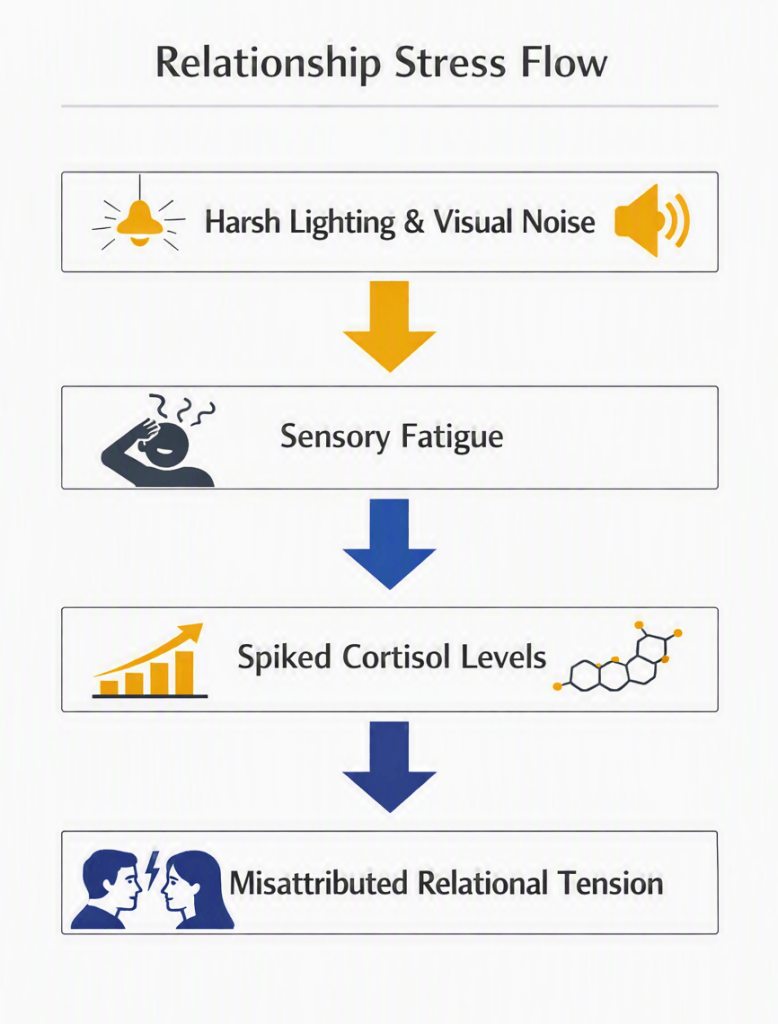
Our brains constantly process spatial cues. Natural light, ceiling height, colour, and texture influence patience, empathy, and emotional regulation. A dark room with poor ventilation triggers a subtle survival response, spiking cortisol. In contrast, visually harmonious spaces with soft lighting stimulate serotonin and oxytocin, the neurochemicals responsible for bonding and trust.
Why Design Choices Affect Connection and Communication
The architecture of a room sets the tone for human interaction. I’ve seen couples relax instantly in spaces that feel warm and intentional, and become tense in rooms that feel echoey or awkwardly arranged. Supportive spaces make eye contact easy. Stressful spaces make communication feel combative before a single word is spoken.
The Emotional Architecture of a Home
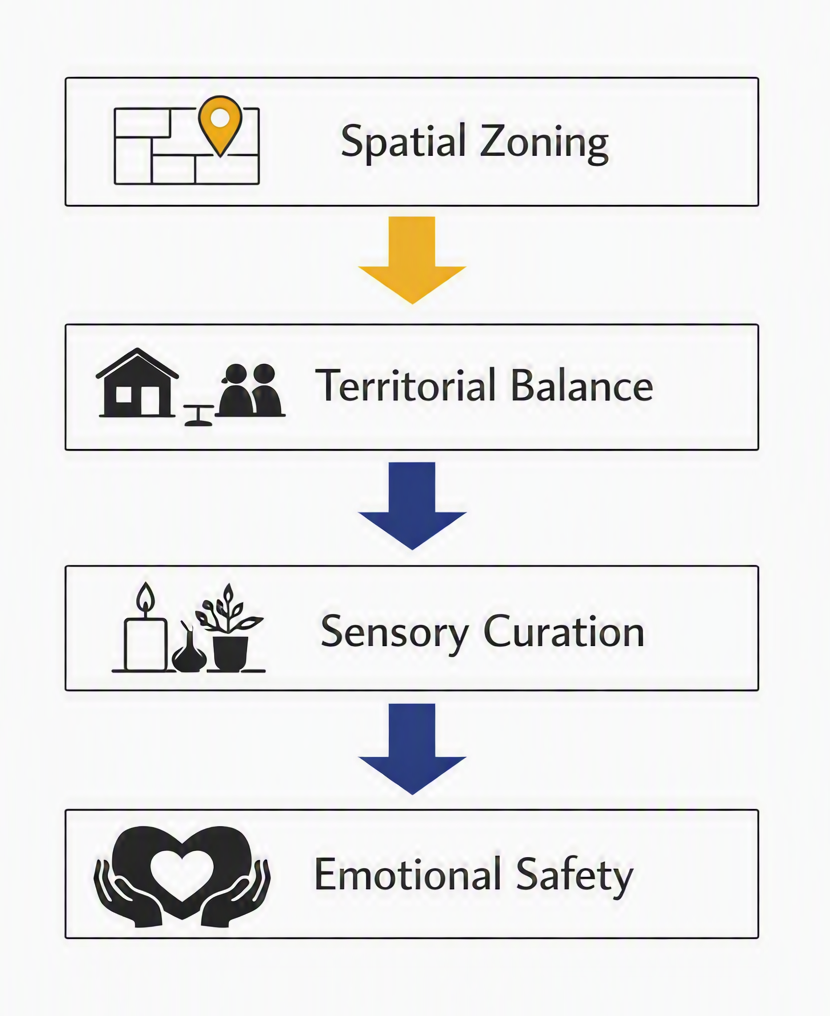
Many couples misread environmental stress as relational stress. Harsh lighting, visual noise, or poor acoustics create sensory fatigue. The brain looks for an explanation, and often blames the nearest person. When a home’s atmosphere is warm and coherent, emotional safety increases and communication softens.
Atmosphere as an Unspoken Relationship Dynamic
Atmosphere isn’t just a design concept. It’s an emotional one. A cold, harsh atmosphere prompts defensiveness. A thoughtfully curated atmosphere introduces softness and makes difficult conversations feel less charged.
How Space Shapes Mood, Desire, and Tension
Intimacy needs psychological safety. Desire grows in spaces that feel warm, tactile, and intentional. Tension grows in spaces that feel chaotic or clinical. If a living room feels like a corporate lobby or a storage unit, the relationship struggles to find its rhythm.
Core Principles of Relationship‑Focused Design
Interior designers work with zoning, sensory curation, and territorial balance every day. As an artist, I see how these principles affect the emotional tone of a home and how art can support them.
Clarity and Comfort in Shared Spaces
Shared spaces work best when they feel intuitive. Clear pathways, comfortable seating, and thoughtful storage reduce daily irritation and support natural interaction.
Balancing Individual Needs with Couple Identity
A healthy home honours both Me and We spaces. Personal nooks allow each partner to decompress individually, so they can return to the relationship fully charged.
Sensory Cues That Support Calm and Intimacy
Biophilic elements like wood, linen, clay, and warm colour temperatures signal safety to the primitive brain. These cues lower anxiety and increase closeness.
The Psychology of Private Spaces
The bedroom is the emotional barometer of a relationship. As an artist, I often create work specifically for bedrooms because the atmosphere matters deeply. This space should be a sanctuary for rest and intimacy, not a multi-purpose zone.
The Bedroom as an Emotional Barometer
A calm, minimalist bedroom signals that it is safe to unwind and connect. A chaotic bedroom filled with laundry or work items erodes intimacy and sleep quality.
How Layout and Flow Influence Intimacy
Symmetry supports partnership. Balanced lighting, equal walking space, and centred bed placement create a sense of equality. A bed pushed against a wall creates a literal hierarchy.
Creating Zones for Connection and Rest
Keep the bedroom single-purpose. Removing desks, exercise equipment, and televisions strengthens emotional rhythm and makes the space feel sacred.
Art as a Relationship Tool
This is where my world intersects most directly with design psychology. Art influences emotional energy through neuroaesthetics, the study of how the brain responds to visual aesthetics. The pieces you choose become part of the emotional architecture of your home.
Figurative Art and Emotional Realism
Figurative art with gentle expressions or soft abstractions activates the mirror neuron system. When people look at imagery that evokes warmth or shared humanity, their brains replicate those feelings. This is why certain artworks make a room feel more intimate.
Using Imagery to Shift Atmosphere and Energy
Art can de-escalate tension. Soft landscapes, warm figurative pieces, or minimalist works in high-friction zones lower cognitive overload and calm the nervous system. I often create paintings specifically to support this kind of emotional atmosphere.
Common Design Mistakes that Harm Relationships
- Over Neutral Interiors that Flatten Emotion
Showroom aesthetics look pristine online but suppress emotional warmth. Homes need personality and softness to support connection. - Clutter, Chaos, and Cognitive Overload
Visual noise is mental friction. Unorganised items demand attention, increase stress, and shorten tempers. - Spaces that Discourage Interaction
Rooms oriented solely toward a television reduce face-to-face conversation. If furniture layouts block eye contact, the space actively pushes partners into isolated digital silos.
How to Design a Relationship‑Supporting Home
You don’t need an expensive renovation to shift the emotional tone of your home. Small structural changes make an immediate difference:
- Audit Your Lighting
Swap cold, white bulbs for warm amber lighting to trigger relaxation. - Re-Orient Your Seating
Angle living room chairs slightly inward to invite face-to-face connection. - Clear the Bedroom Sightlines
Remove visible clutter and electronics from your direct line of sight when lying in bed to give your mind a true sensory break.
By aligning your interior aesthetics with design psychology, your home becomes a quiet ally in your relationship. Art plays a powerful role in this. The right piece doesn’t just decorate a room. It fundamentally changes how that room feels.
Further Reading:
- Art & Interior Design for Atmospheric Spaces | Wilde About Art
- Contemporary Figurative Art in Interior Design – Wilde About Art
- Curating Emotional Realism: A Guide for Stylists and Collectors
- Deco Noir: The Twin Aesthetics Shaping Modern Interior Design in 2026
- Georg Baselitz by Hans Werner Holzwarth
- Helmut Newton: Monochrome Photography for Modern Homes
- How Architectural Scale Affects Artwork Choices in Modern Penthouses
- How to Choose & Style Coffee Table Books Like a Pro