

Understanding the difference between Soft Cubism vs Cubism reveals more than a stylistic shift—it opens a dialogue between emotional abstraction and formal disruption. While Soft Cubism isn’t a formal movement, it reflects a visual and emotional language shared by artists like Tamara de Lempicka and reinterpreted in my studio through monochromatic figuration, neurodivergent rhythm, and emotional realism.
This post explores how Cubism, Art Deco, and contemporary drawing intersect—and where my work finds its own rhythm between fragmentation, stylization, and feeling.
🎨 Cubism vs. Soft Cubism: A Comparative Lens
| Feature | Picasso – Les Demoiselles d’Avignon (1907) | Tamara de Lempicka – Woman in Red (Portrait of Mrs. Bush) (1930) |
|---|---|---|
| Movement | Proto-Cubism / Analytical Cubism | Art Deco with post-Cubist influence |
| Form Treatment | Highly fragmented, angular, distorted | Geometric but polished, sculptural, stylized |
| Emotional Tone | Confrontational, raw, disjointed | Controlled, poised, emotionally restrained |
| Perspective | Multiple viewpoints collapse into one | Single, frontal viewpoint with clarity |
| Figuration | Faces and bodies abstracted into planes | Human form remains intact, idealized, and composed |
| Viewer Relationship | Direct gaze, unsettling presence | Detached elegance, formal distance |
| Intent | Deconstruct traditional beauty and space | Celebrate modern femininity, status, and style |
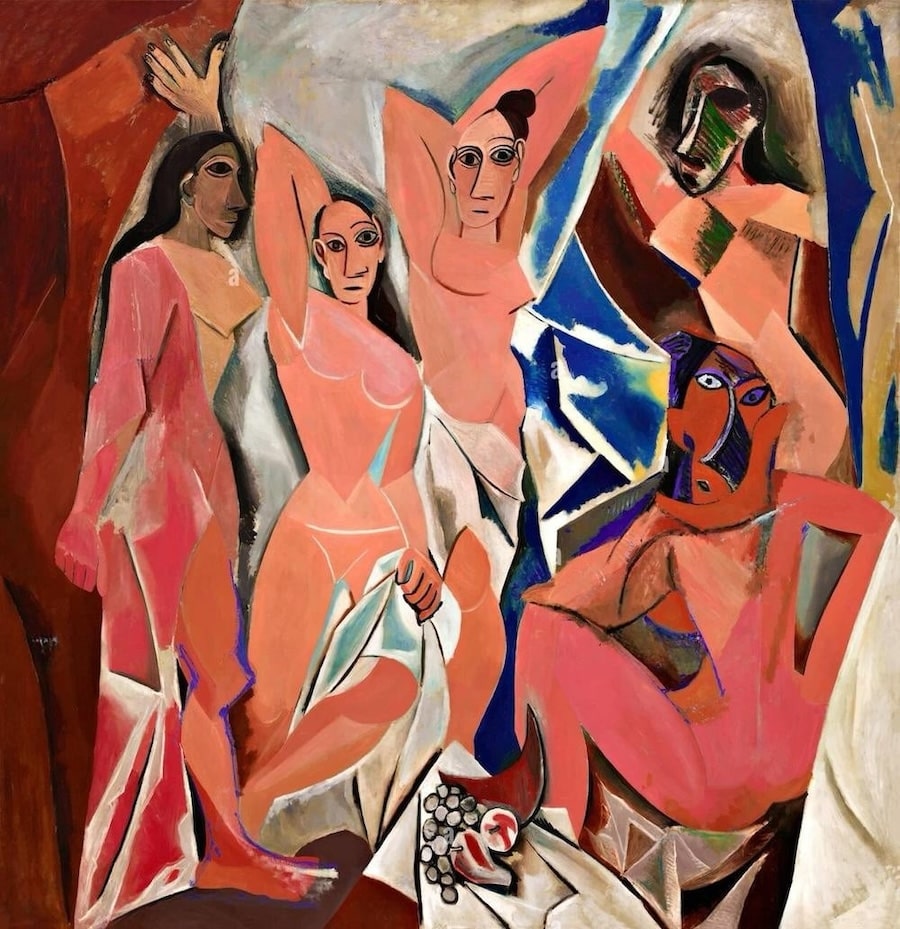 Les Demoiselles d’Avignon, 1907 by Pablo Picasso
🧩 Picasso’s Les Demoiselles d’Avignon: Fragmentation as Disruption
Picasso’s painting shattered conventions. The five female figures are fractured into jagged planes, their bodies distorted and faces mask-like—some influenced by African sculpture. The composition rejects depth and idealized beauty, instead offering a raw, almost violent confrontation with the viewer.
This is Cubism at its most radical: a breakdown of form, perspective, and emotional coherence. It’s not meant to soothe—it’s meant to provoke.
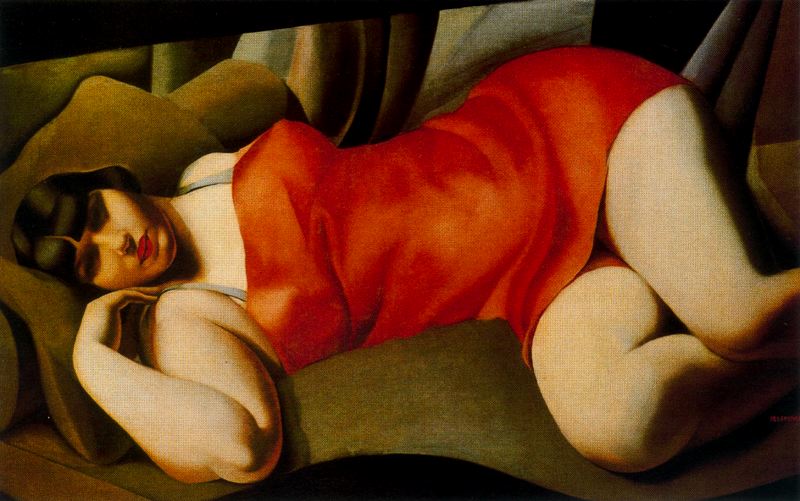 Tamara de Lempicka – Woman in Red (Portrait of Mrs. Bush) (1930)
💎 Lempicka’s Woman in Red: Geometry as Glamour
Tamara de Lempicka’s Woman in Red (Portrait of Mrs. Bush) is a masterclass in stylized elegance. The figure is sculptural, poised, and emotionally contained. Her use of geometric abstraction is softened—curves are polished, shadows are architectural, and the red dress becomes a visual anchor of power and refinement.
While influenced by Cubism, Lempicka’s work leans into Art Deco, using geometry to enhance beauty rather than dismantle it. Her abstraction is decorative, not disruptive. It celebrates form, femininity, and modernity.
🌫️ Soft Cubism: My Emotional Response to the Hard Angles of Art
I like to think my practice sits somewhere between these poles. Like Picasso, I fragment form—but gently. Like Lempicka, I preserve emotional presence—but through vulnerability rather than style.
Soft Cubism, as I define it:
- Uses abstraction to evoke emotional nuance, not to obliterate identity
- Embraces incompletion and tonal subtlety
- Balances structure with fluidity, allowing space for memory, ambiguity, and neurodivergent rhythm
- Prioritizes emotional realism over spectacle or polish
Where Picasso fractures to confront, and Lempicka stylizes to seduce, I dissolve and fragment to feel.
Further Reading:
- Foundational Essay: Art Theory: Understanding the Ideas That Shape Contemporary Art
- Soft Cubism: A Gentle Approach to Figurative Abstraction – My full studio reflection on emotional abstraction