

Opening Frame
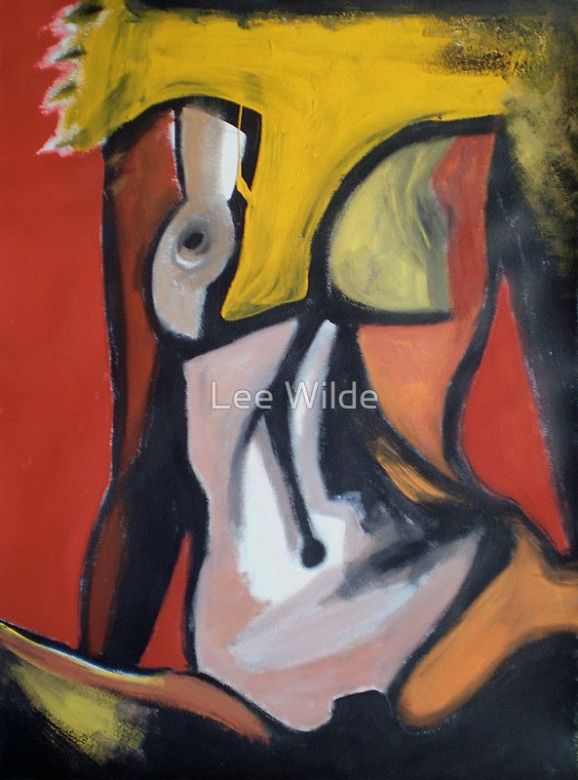
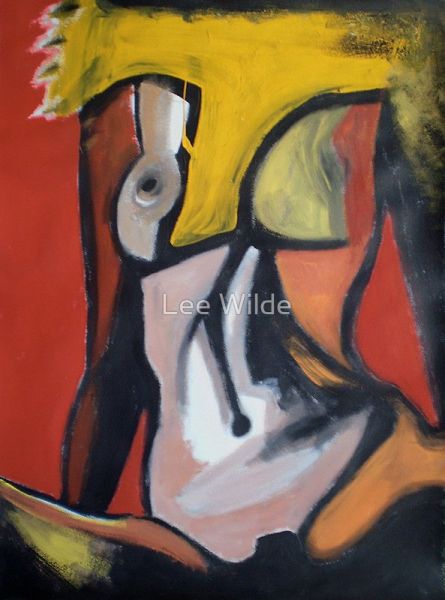
This figurative abstract painting by Lee Wilde captures the primal tension between instinct and identity. The composition feels ceremonial — a portrait of appetite rendered through pattern, texture, and theatrical costume. It’s a study of hunger as both aesthetic and emotional condition, where abstraction becomes ritual.
Formal Analysis
Wilde constructs the figure through angular planes and rhythmic symmetry. Feathers, triangles, and mirrored geometry create a pulse of movement across the surface. The palette — ochre, crimson, and black — evokes earth and blood, while the vertical orientation amplifies presence. Her brushwork alternates between precision and expressive blur, suggesting motion beneath stillness and the body as symbol rather than anatomy.
Emotional Temperature
There’s a charged duality here: celebration and menace. The costume reads as armour, yet the stance feels open, almost performative. The painting hums with vitality — hunger not as deprivation but as drive. It’s a portrait of becoming, of the human animal dressed for ceremony.
Contextual Placement
Within Wilde’s body of work, this figurative abstract painting extends her exploration of archetype and identity. It connects to her noir sensibility and fascination with symbolic costume — the predator, the performer, the self in disguise. The piece bridges emotional realism and mythic abstraction, revealing how gesture can carry narrative weight.
Design Literacy
Collectors and designers respond to its vertical authority. The composition behaves like a totem — commanding space, drawing the eye upward. In interiors, it introduces narrative energy and cultural texture, pairing beautifully with minimalist architecture or raw materials like timber and stone. The painting’s geometry lends it both modernity and myth.
Collector Note
This artwork has been collected.